Ever felt like you’re writing your thesis in slow motion? That creeping realization when you check the calendar and discover another two months have vanished, yet your thesis still feels light-years from completion? You wake up determined, spend hours at your desk, read articles, take notes… but when evening comes, you ask yourself: “What did I actually accomplish today?”
You’re not alone in this struggle. Recent data from AlmaLaurea reveals that 38.7% of two-year master’s students graduate behind schedule. When it comes to thesis work specifically, the situation gets dramatically worse. While the 2023 national average for completing a thesis stands at 4.7 months (3.4 for bachelor’s), reality tells a different story: most students take double or even triple their planned time.
The culprit? It’s not your writing ability or the complexity of your topic. The real invisible enemy is time management for thesis writing — or rather, the poor management nobody taught you at university.

Why do you work so hard yet advance so little? Because there are 5 fatal errors silently devouring weeks and months without you noticing. Invisible errors, yet devastating. The good news? They’re all preventable.
This article reveals exactly what these 5 errors are, how much time they’re costing you (prepare yourself — it could be up to 20 weeks), and most importantly, how to eliminate them completely with an intelligent approach to thesis time management using Tesify, the platform that’s already helped hundreds of Italian students cut their graduation time in half.
⚠️ The 5 Critical Time Management Errors
- Starting to write without a clear macro-structure
- Not using a thesis-specific workflow
- Leaving formatting until the end
- Not tracking progress visually
- Underestimating revision time
Total recoverable time: 11-20 weeks
Ready to discover how to recover months of work? Keep reading. What you’re about to learn could literally change your graduation date.
How Time Management in Thesis Writing Actually Works
Before revealing the 5 fatal errors, I need to explain an uncomfortable truth few professors will ever tell you: time spent on your thesis isn’t equal to productive time. This difference is exactly what’s costing you months of your life.
Think about your typical week. Did you dedicate 20 hours to your thesis? Fantastic. But how many of those 20 hours produced concrete, usable, final content? If you’re honest with yourself, probably 5-6 hours. Maybe less.
The rest? False productivity. Reading articles that “might be useful” without strategy. Rewriting the same introduction for the fourth time. Spending an hour fixing a table’s formatting. Googling “how to cite a website in APA” for the umpteenth time. Opening 47 browser tabs you’ll never close.
Thesis writing passes through 4 critical phases, and each requires a completely different approach to time management.
- Research and material collection (25-30% of total time)
- Structuring and planning (15-20% of total time)
- Actual writing (35-40% of total time)
- Revision and formatting (20-30% of total time)
The problem with traditional time management methods — like the Pomodoro technique or generic to-do lists — is that they’re not designed for long, complex projects like a thesis. They work perfectly for isolated tasks (“reply to emails,” “study chapter 3”), but collapse miserably when you need to orchestrate a months-long project with dozens of interconnected sub-phases, variable deadlines, and an advisor who responds whenever he feels like it.
According to a study by the University of Bologna on student behavior during thesis work, students who don’t use a specific management system for long academic projects take on average 40% more time than those using structured tools. Forty percent. Translated: if you think you’ll finish in 8 months, you’ll actually take 11.
Then there’s the phenomenon I call “the serial reader paradox”: that student (maybe it’s you?) who’s read 200 articles, has 15 books open on the desk, knows the topic better than their advisor… but has written only 10 pages in 3 months. Why? Because reading gives the illusion of productivity without the fatigue of writing. It’s procrastination disguised as research.
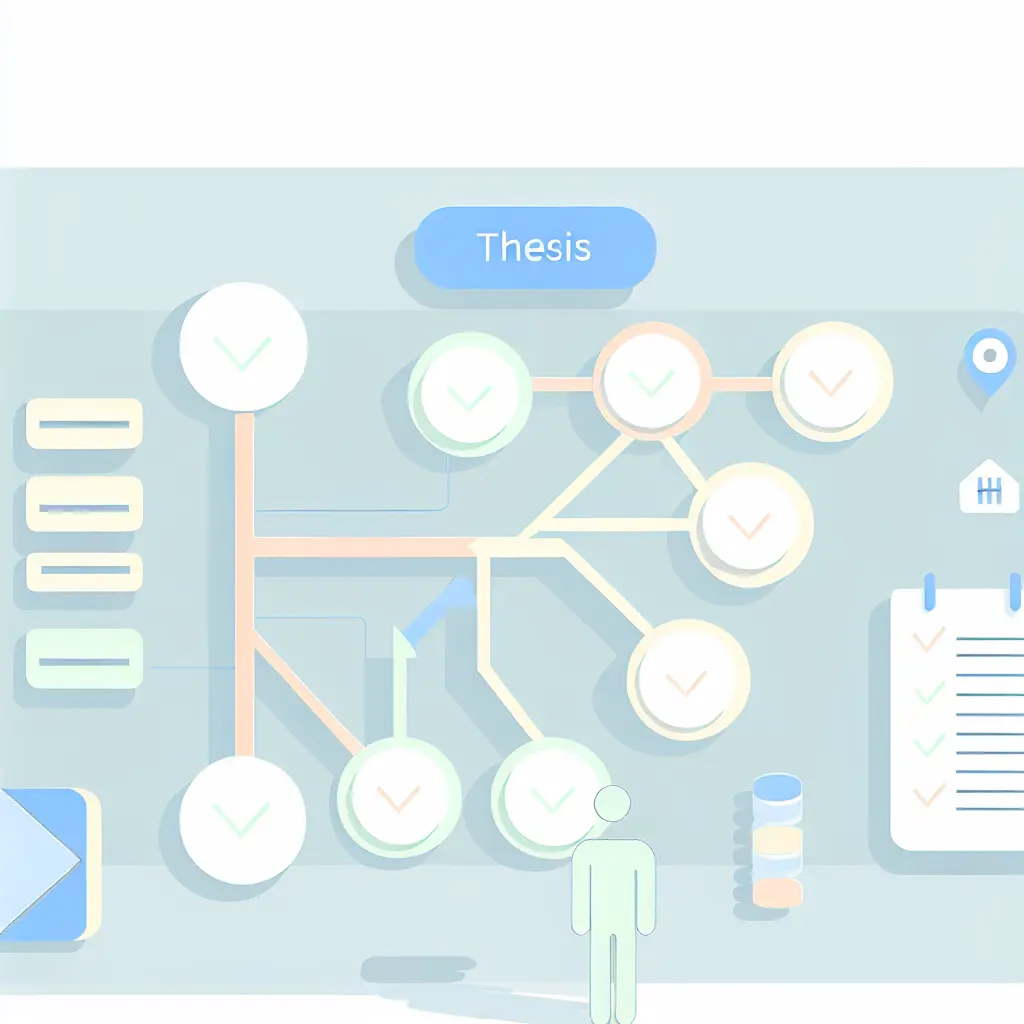
Good time management for thesis writing doesn’t mean working more. It means working in a structured, sequential, and measurable way. It means knowing exactly what to do each day, having tools that eliminate bottlenecks, and seeing progress tangibly.
This is where traditional tools fail. Word doesn’t know which phase of your thesis you’re in. Google Docs won’t remind you that you should have finished chapter 2 last week. Paper to-do lists don’t automatically update when you change the structure.
But why do so many students lose months even when they’re “working”? Here are the 5 invisible errors sabotaging your graduation…
The 5 Fatal Errors in Thesis Time Management
Error #1 — Starting to Write Without a Clear Macro-Structure
This is the original sin. The error that contaminates everything else in your journey. And I bet you’ve committed it too.
Here’s how it typically goes: you have your topic, your advisor vaguely nodded approval, and you think: “Okay, I’ll start writing the introduction, then we’ll see…” Or: “First I’ll do all the research, then I’ll structure it.”
FATAL ERROR.
Let me tell you about Martina, a Psychology student in Padua. She started writing her thesis on anxiety disorders without first defining a detailed structure. Result? She wrote a 25-page introduction (yes, twenty-five), then realized half the content belonged in chapter two. She rewrote it. Then her advisor said she was missing a methodology chapter. Rewrite number three. Total time lost: 6 weeks.
Starting without a macro-structure is like building a house without blueprints. Sure, you can start laying bricks, but when it’s time to create rooms, you realize the walls are in the wrong places. Demolishing costs triple the effort you would have spent planning first.
⏰ Estimated time lost: 2-4 weeks (sometimes even more for complex theses)
✓ Solution with Tesify
Tesify solves this problem at its root with integrated macro-structure templates specific to each thesis type (experimental, compilative, project-based). Before writing a single word, you define:
- Complete hierarchical structure (chapters → subchapters → paragraphs)
- Specific objectives for each section
- Logical flow of argumentation
- Target word count for each chapter
The best part? You can visualize the entire structure at a glance, reorganize it with drag-and-drop, and share it with your advisor before wasting weeks writing in the wrong direction.
Want to learn more? Read the complete guide: Master’s Thesis Macro-Structure: Complete 2025 Guide
⚡ Time saved: define your structure in 30 minutes instead of discovering problems after 6 weeks
Error #2 — Not Using a Thesis-Specific Workflow
This error is more insidious because it seems like you’re doing everything right. You have a to-do list. You work every day. You check off tasks. Yet… the thesis isn’t advancing.
The problem? You’re using a generic workflow for a project requiring a specialized one.
When you write “work on thesis” on your to-do list, what does that actually mean? Reading? Writing? Revising? Formatting? Finding sources? Without a specific workflow, you end up doing “random thesis management”: a bit of this, a bit of that, never truly completing any phase.
This spawns three productivity killers:
- Dispersion — constantly jumping between different tasks without finishing any
- Wrong priorities — spending an afternoon fixing bibliography when you haven’t finished chapter 3
- Strategic procrastination — doing easy things (rereading, formatting) to avoid hard ones (writing new content)
The data is merciless: according to research on doctoral students (who have even more research experience than master’s students), those not using a structured workflow take 40% longer to complete academic writing projects. And 40% of 8 months means 3 extra months. Almost a semester.
⏰ Estimated time lost: 3-6 weeks in non-priority activities, repetitions, and “invisible work”
✓ Solution with Tesify
Tesify implements a Smart Guide with progressive checklists specific to each thesis phase. No more generic “work on thesis,” but:
- Research Phase: “Identify 15 primary sources,” “Complete concept map,” “Validate bibliography with advisor”
- Writing Phase: “Draft chapter 1 (2000 words),” “Revise introduction,” “Integrate advisor feedback”
- Revision Phase: “Check argumentative coherence,” “Control citations,” “Final proofreading”
Every task is time-boxed (you know how long it should take), has clear priority, and unlocks only when you’ve completed prerequisites. It’s impossible to waste time on non-priority activities because the system guides you sequentially.
Discover more: Advanced use of Smart Guide in Tesify for students 2025
⚡ Result: zero dispersion, always clear priorities, constant advancement
Error #3 — Leaving Formatting Until the End (and Doing It Manually)
This is the error I’ve seen ruin more graduations than any other. The beautiful part? It arrives when you think you’re finished.
Classic scene: you’ve written everything. You’ve sweated blood over every chapter. Your advisor gave the okay. Two weeks until submission and you think: “Now I just need to format and I’m done!”
Then you open the document and realize the horror.
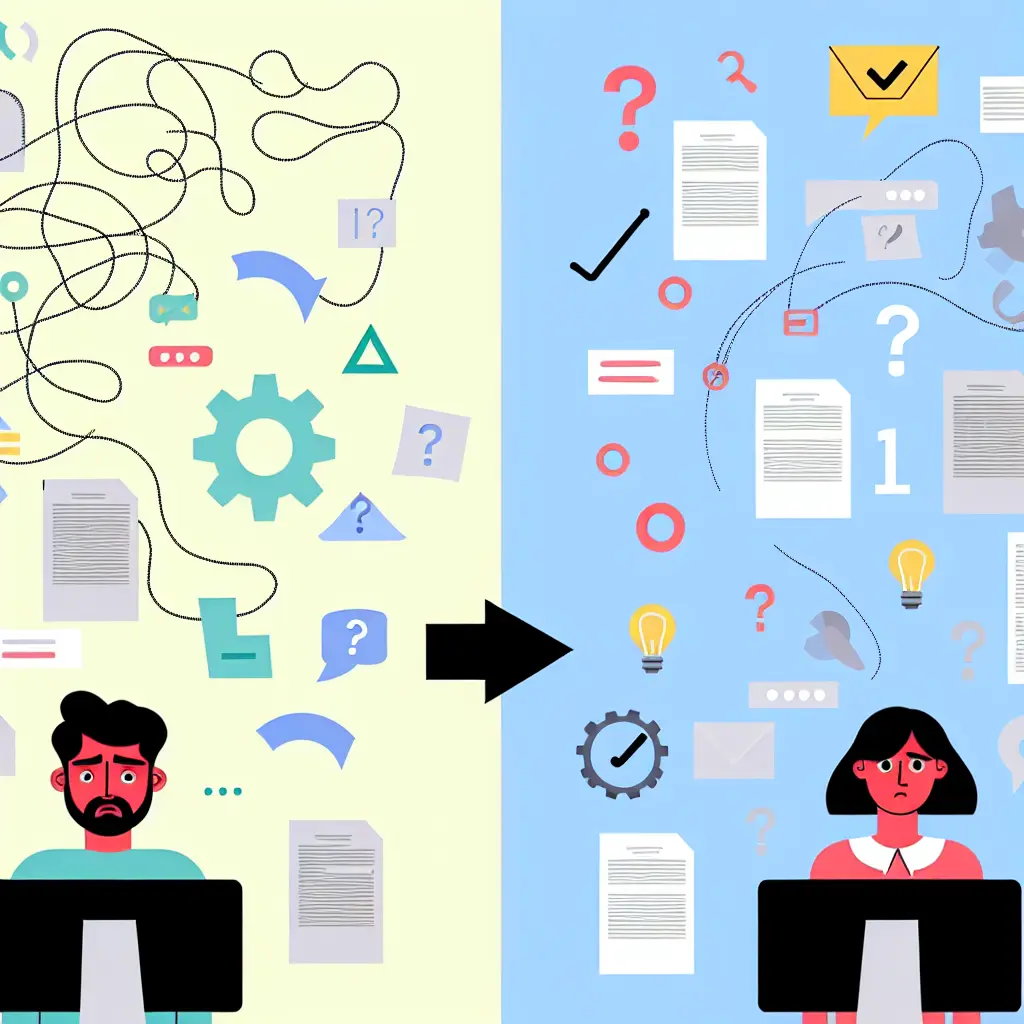
Margins differ in every chapter. The index is manual and completely wrong. Citations are a mess (some in APA, some in Chicago, some… who knows?). Page numbers jump around. Headings are randomly formatted. Tables overflow margins. The bibliography isn’t alphabetical and half the references are missing.
Welcome to manual formatting hell.
Let me tell you a true story that still gives me anxiety. Luca, Engineering student in Milan. Finished writing his thesis in January. Expected to graduate in March. Spent 7 full days (not hours, days) fixing formatting. Then sent the thesis to the printer and it came back with more errors. Another 3 days. Missed the March session. Graduated in April. 3 months lost to formatting.
⏰ Estimated time lost: 1-2 weeks (in worst cases even a month)
✓ Solution with Tesify
With Tesify, formatting is automatic and compliant from the start. It’s not something you do at the end — it’s something you never have to do.
- Predefined styles compliant with major Italian universities (Bocconi, Sapienza, PoliMi, Bologna, Padua, etc.)
- Automatic index that updates in real-time when you modify titles or content
- Automatic numbering of pages, chapters, figures, and tables
- Automatic bibliography in any style (APA, MLA, Chicago, Harvard, Vancouver) with one click
- Integrated citation management — insert the source once, cite it everywhere
- PDF export ready for printing, already formatted
Write the content. Tesify does the rest. When you finish writing, you’ve already finished formatting too.
Learn more: Automatic thesis formatting with Tesify: 2025 guide
⚡ Time saved: from 2 weeks of manual formatting to 2 minutes of automatic export
Error #4 — Not Tracking Progress Visually
This error is psychological, but has devastating practical consequences on your time management.
When you work on your thesis for months without a clear, visual way to see your progress, your brain enters “I’m getting nowhere” mode. And when you think you’re making no progress, what happens? You procrastinate. You lose motivation. You develop anxiety. You avoid working. Which obviously slows progress even more. Vicious circle.
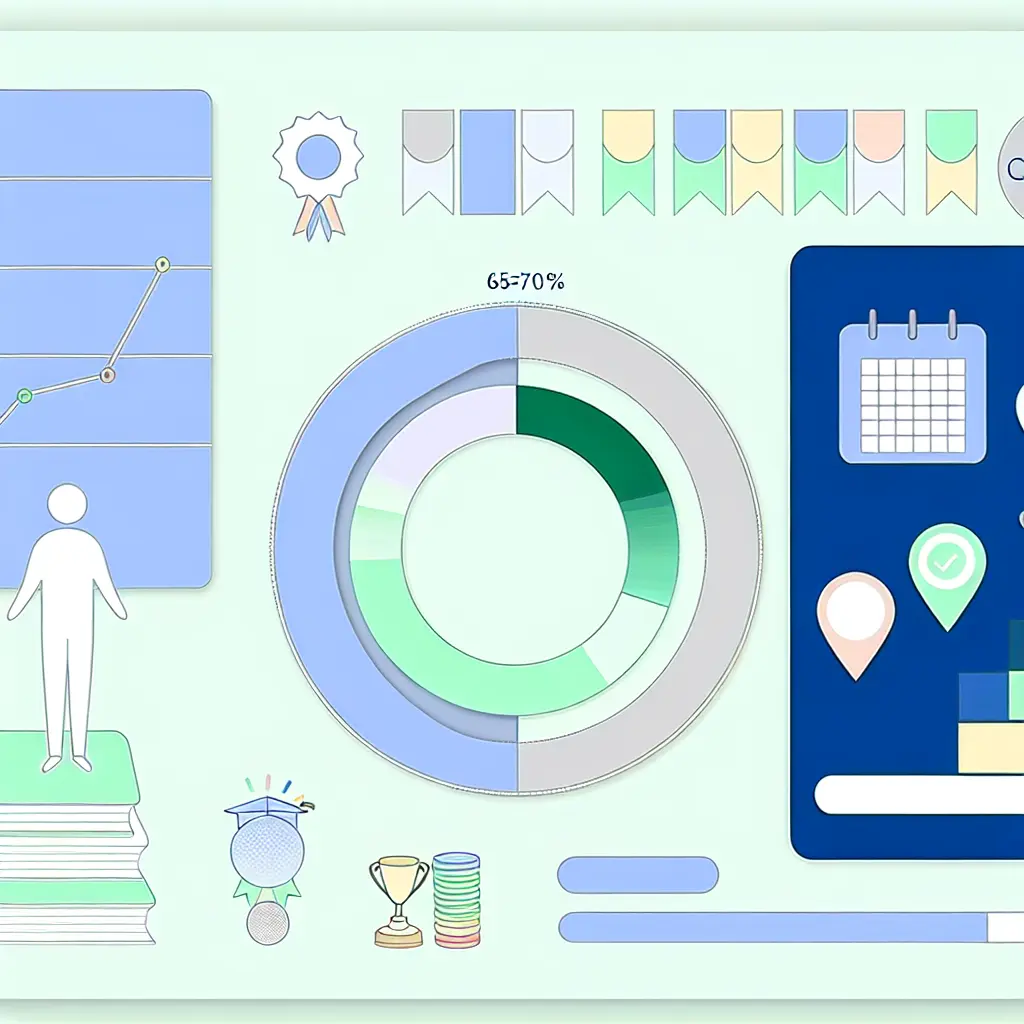
The problem with traditional methods is that progress is invisible. Did you write 3,000 words today? Great. But how many are left? Are you ahead or behind? How much until the end of the chapter? What percentage of the total are you at?
You don’t know. And not knowing generates anxiety.
There’s a behavioral psychology principle called the “progress principle,” documented by Harvard researcher Teresa Amabile: seeing tangible progress in your work is the most powerful motivational factor — more than external rewards, more than positive feedback. Simply seeing that you’re advancing increases productivity by 20-30%.
⏰ Estimated time lost: 2-3 weeks in slowdowns, blocks, and unproductive days caused by demotivation
✓ Solution with Tesify
Tesify transforms your invisible progress into visual, motivating metrics:
- Progress bar for each chapter — see in real-time how much you’ve completed
- Dashboard with total percentage — “Thesis 67% complete”
- Visual milestones — “You just passed halfway through chapter 3!” 🎉
- Writing statistics — words written today/this week, average speed, completion projection
- Streak tracking — how many consecutive days you’ve worked on your thesis
- Timeline comparison — are you ahead or behind schedule?
Every time you open Tesify, you immediately see where you are. You see that you’re advancing. You see the finish line approaching. And this changes everything psychologically.
⚡ Result: constant motivation, reduced anxiety, 20-30% increased productivity
Error #5 — Underestimating Revisions and Not Planning Them
The final error is also the one that most often transforms “I’m almost ready” into “I need another two months.”
Almost all students dramatically underestimate the time needed for revisions. They think: “I’ve finished writing, now just a quick proofread and I’m done.”
Then this happens:
You send the thesis to your advisor. He responds after 2 weeks (if you’re lucky) with 47 comments. You modify. You resend. He finds another 23 problems. You modify again. The co-advisor wants to have his say. The citation format isn’t right. Another revision needed. Two months have passed.
The uncomfortable truth? Revisions typically require 30% of total thesis time, yet most students allocate maybe 10%. This mismatch alone can add 4-6 weeks to your timeline.
⏰ Estimated time lost: 3-5 weeks in unplanned revision cycles
✓ Solution with Tesify
Tesify builds revision time into your workflow from day one with:
- Integrated feedback system — advisors comment directly in the platform
- Version control — track every change and revert if needed
- Revision checklist — systematic checks before each advisor meeting
- Comment resolution tracking — never lose track of what needs fixing
- Automatic backup — never lose work due to technical issues
⚡ Time saved: planned, efficient revisions instead of chaotic back-and-forth
Your Next Step: Stop Losing Time, Start Graduating
You’ve just discovered the 5 invisible errors costing you up to 20 weeks. The question now isn’t whether you’re making these mistakes — statistics say you probably are. The question is: what are you going to do about it?
Every day you continue with inefficient time management is another day farther from graduation. Another day of stress. Another day watching your classmates graduate while you’re still stuck.
The good news? You can start fixing this today. Right now. Tesify gives you everything you need to transform your thesis process from chaotic to systematic, from stressful to manageable, from endless to achievable.
Ready to Graduate Faster?
Join hundreds of Italian students who’ve already cut their thesis time in half with Tesify’s intelligent time management system.
Your future self will thank you for making this decision today.